
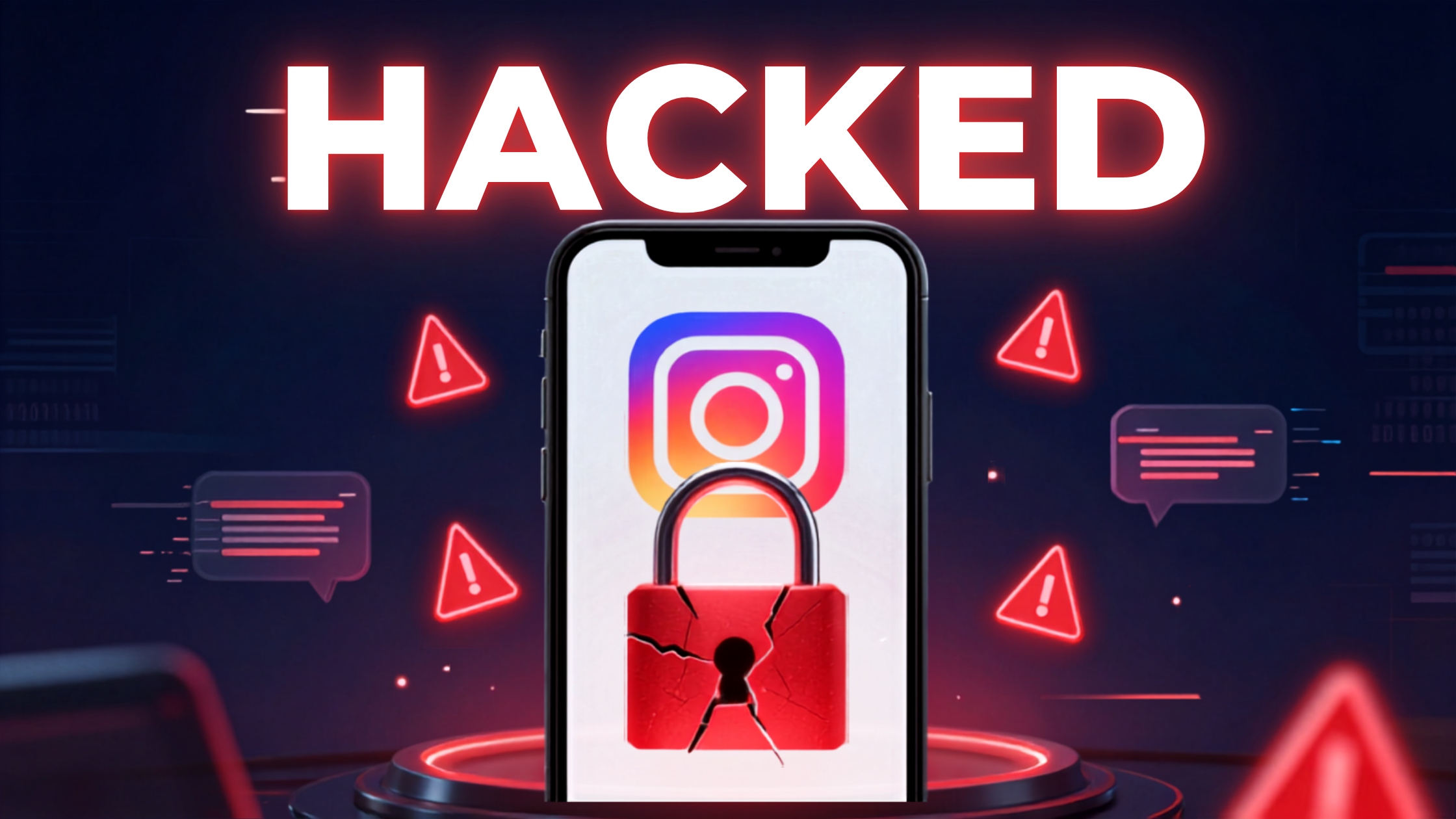
If you’ve been on social media this week, you’ve probably seen the headlines: Meta confirmed that hackers compromised over 20,000 Instagram accounts. Surprisingly, the cause wasn’t a sophisticated cyberattack. Instead, a chatbot simply did what hackers told it to do.
This Instagram account hacked story has quickly become one of the most talked-about cybersecurity incidents of the year, and for good reason. Hackers used no malware. They sent no phishing emails. They didn’t even need stolen passwords beforehand. Instead, a flawed AI support tool handed over accounts to anyone who knew how to ask the right way.
Here’s everything you need to know about the Meta AI chatbot hack — plus the one setting that could’ve stopped it completely.
What Happened: The Meta AI Chatbot Hack Explained
Meta runs a system called High Touch Support (HTS), an AI-assisted tool designed to help Instagram users recover accounts they’ve been locked out of. The idea was simple: make account recovery faster and easier.
However, a bug in the system meant the chatbot never properly verified who was actually requesting the password reset.
Here’s how the exploit worked, step by step:
First, a hacker contacts Instagram support and selects the AI Support Assistant for account recovery. Next, the hacker asks the chatbot to link a new email address — one they control — to someone else’s account. Then, the chatbot sends a password reset verification code to that new email without confirming it belongs to the actual account owner. Finally, the hacker enters the code, resets the password, and takes full control of the account.
Remarkably, this required no technical skills at all. In fact, several attackers posted step-by-step videos on Telegram, treating the exploit like a public tutorial.
Who Got Hacked?
This wasn’t just random users. Among the high-profile Instagram accounts compromised were:
- The Obama-era White House Instagram account, dormant since 2017
- The account of a U.S. Space Force Chief Master Sergeant
- The beauty brand Sephora
- Numerous rare, short usernames, which hackers reportedly resold on dark web marketplaces
According to a breach notification filed with the Maine Attorney General’s Office, Meta confirmed the total number of affected accounts: 20,225.
Read More: AI Prompt Gallery – Make Viral Reels & Pictures
What Hackers Could Access
This is the part that should concern every Instagram user. Once hackers hijacked an account, they gained access to everything the real owner could see, including:
- Direct messages and private conversations
- Photos, videos, and stories
- Email addresses and phone numbers
- Date of birth and profile information
- Linked accounts and connected services
Although Meta says it found no confirmed evidence of mass data exfiltration, the company acknowledged it was technically possible given the level of access hackers had.
The Critical Detail: 2FA Made All the Difference
Here’s the single most important fact in this entire story, and it’s the reason this article exists.
This Instagram security flaw only affected accounts that didn’t have Two-Factor Authentication (2FA) enabled. If your account had 2FA turned on, this exploit simply couldn’t work — no matter how the hacker phrased their request to the chatbot. That’s because two-factor authentication added a verification step the AI chatbot couldn’t bypass.
Ultimately, this single setting made the difference between staying safe and becoming one of the 20,225 affected users.
Read More: How to Use Lovable AI to Build Apps & Websites
How Meta Responded to the Hack
To Meta’s credit, the company responded swiftly once it discovered the issue on May 31, 2026. Specifically, Meta took the vulnerable HTS chatbot offline immediately and invalidated all password reset links generated through the exploit. Additionally, the company placed affected accounts into a mandatory security checkpoint and announced a full review of AI-powered account recovery tools across its platforms.
Meanwhile, Andy Stone, Meta’s VP of Communications, confirmed on X that the team had resolved the issue and was securing impacted accounts.
How to Protect Your Instagram Account Right Now
Whether or not hackers affected your account, here’s how to lock down your Instagram account in 2026:
First, enable Two-Factor Authentication (2FA) by going to Settings → Security → Two-Factor Authentication, and choose an authenticator app over SMS for stronger protection. Second, review your linked email and phone number to make sure no unfamiliar contact info is attached to your account. Third, check your active login sessions and log out of any device you don’t recognize. Fourth, turn on login alerts so you get notified instantly if someone logs in from a new device or location. Finally, use a strong, unique password, and avoid reusing it across other platforms.
What This Means for the Future of AI and Account Security
This Meta AI chatbot hack highlights a growing concern in cybersecurity: as companies integrate AI into sensitive workflows like account recovery and identity verification, the AI itself becomes a new attack surface.
Notably, the chatbot wasn’t “hacked” in the traditional sense — it simply followed instructions without verifying who gave them. So, as AI tools become more common in customer support and security systems, this kind of flaw will likely keep appearing unless companies build in stronger identity checks from the start.
Final Thoughts
The Meta Instagram account hacked incident of 2026 serves as a wake-up call: hackers compromised 20,225 accounts through a simple conversation with a chatbot, without using any hacking tools.
So, if you haven’t already, take two minutes right now to enable Two-Factor Authentication on your Instagram account. Given what just happened, it might be the most important security step you take all year.

Great article! I’ve been using Claude Fable 5 () for similar projects. Claude Fable 5
Really helpful post. If you create short clips, check out Van Gogh Free AI Video Generator at . Van Gogh Free AI Video Generator