


Let me be straightforward with you I spent a weekend playing with Lovable AI, and by Sunday night I had a completely working web app running with a database, authentication, and a UI I was actually proud of. No mound overflow tabs open. No late-night debugging sessions. Just a converse interface and a vision in my head. That is when I knew I had to write this companion.
???? What’s in this guide
- What is Lovable AI, exactly?
- What AI model does Lovable use?
- How to use Lovable AI (step by step)
- How to use Lovable AI for free
- Pricing breakdown — is it worth it?
- Real Lovable AI use cases
- How to use Supabase with Lovable AI
- Best tips and tricks I wish I knew earlier
- Final verdict — is it safe and legit?
So, What Even Is Lovable AI?
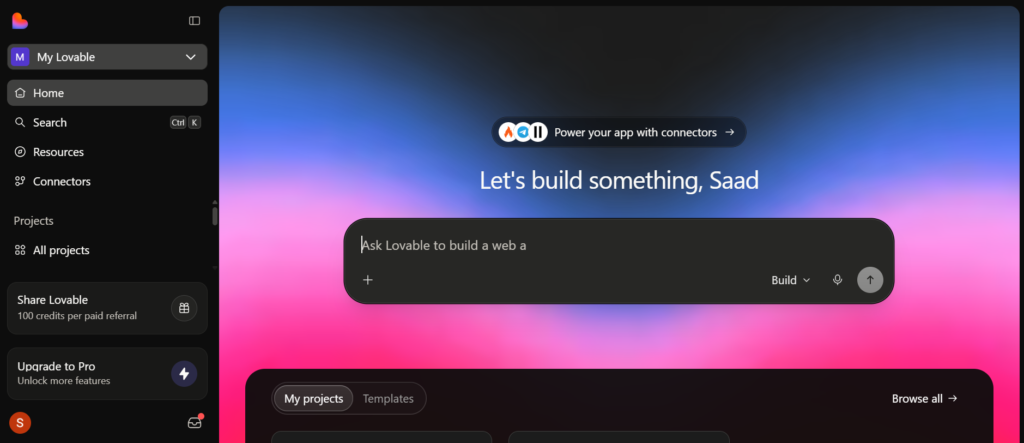
Still, incipiency, or no- law community in the last time, If you’ve been anywhere near the indie hacker. Lovable AI( lovable.dev) is a full- mound AI web app builder – meaning you describe what you want to make in plain English, and it generates the law, the design, and indeed the backend sense for you, live, in real time.
Think of it like having a senior developer sitting next to you who never gets tired, never judges your ideas, and never tells you “that’s not really my area.” You just talk, and it builds.
It’s not a simple drag- and- drop website builder like Wix or Squarespace. Lovable generates factual law – React, TypeScript, Headwind CSS – and you enjoy every line of it. That is what makes it authentically important, especially for people who want to go from idea to a live product presto.
Quick fact: Lovable AI was formerly known as GPT Engineer — one of the pioneering projects that showed the world you could build real software through natural language prompts. It rebranded and evolved into what is now lovable.dev.
What AI Model Does Lovable AI Use?
This is one of the most common questions people search for — and honestly, it’s a smart thing to want to know before you commit to a tool. Lovable AI primarily uses Claude by Anthropic as its underlying AI model for code generation. There’s also some integration with other models depending on the task, but Anthropic’s Claude is at the core of the code-writing magic you experience.
This is significant because Claude is known for its exceptionally strong performance on long, complex tasks — exactly the kind of thing you need when you are asking an AI to make an entire functioning web operation. It’s not just answering a question; it’s maintaining environment across your entire design as it evolves.
So to directly answer what many people wonder – no, Lovable does not use ChatGPT (OpenAI). It leans heavily on Claude, which many developers actually prefer for coding tasks.
Read More: How to Use Claude Code for Free (VS Code, Ollama & Terminal)
How to Use Lovable AI — A Real Step-by-Step
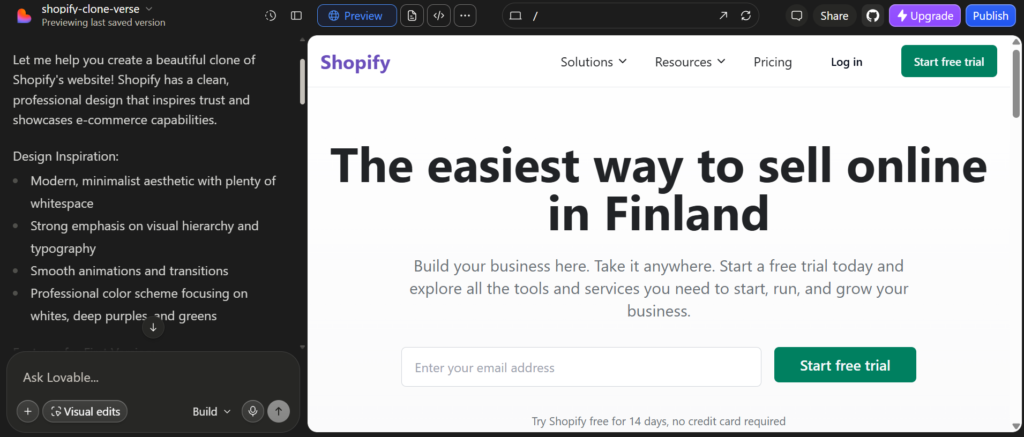
Okay, let’s get practical. Then is exactly how you go from a blank screen to a working app. I will walk you through it the way I wish someone had walked me through it.
Create your free account at lovable.dev
Go to Lovable.dev and sign up. You can create an account using your Google account. No credit card is required to get started – more on the free plan in a moment.
Start a new project and write your first prompt
Click “New Project” and you’ll see a chat-style prompt box. Here’s the thing most people get wrong — they’re too vague. Don’t write “make me a website.” Write something like: “Build a task management app with a clean UI. Users should be able to add tasks, mark them as complete, and filter by status. Use a light color scheme.” The more precise you are, the better the output.
Watch it build — then review the preview
Lovable will start generating code in real time. On the right side, you’ll see a live preview of your app updating as it writes. This is genuinely thrilling the first time. Once it finishes, click around in the preview and note what you want changed.
Iterate with follow-up prompts
This is where the real power is. You do not need to start over every time commodity is not right. Just tell it” Make the title sticky. Change the primary color to deep blue. Add a dark mode toggle.” It understands environment and updates consequently.
Connect a database with Supabase (optional but powerful)
If your app needs to store data – user accounts, saved items, anything persistent – you’ll want to connect Supabase. More on this below. It takes about 5 minutes and suddenly your app goes from a prototype to something real.
Publish and share
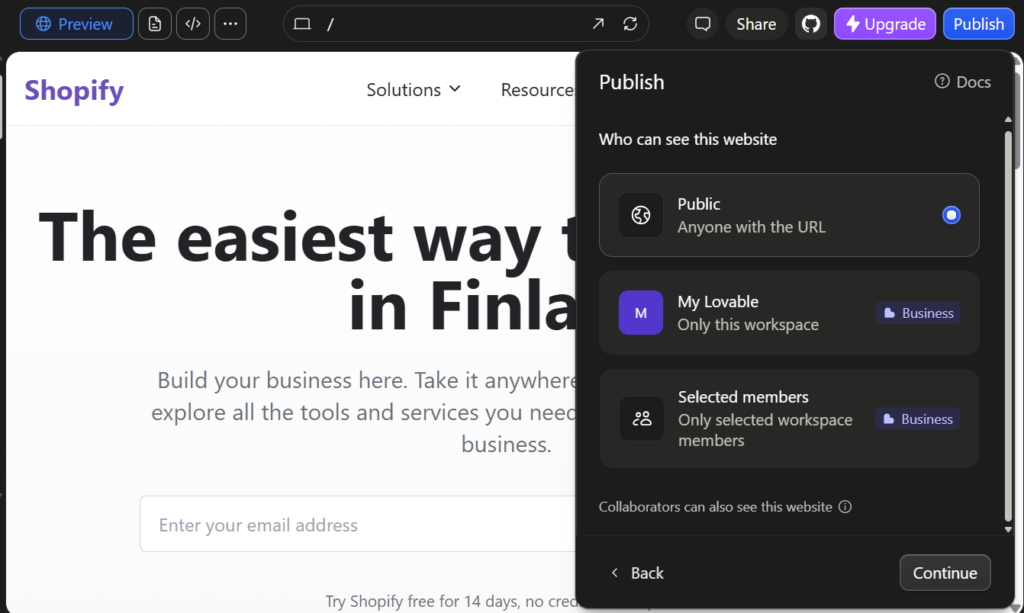
When you’re happy with it, hit “Deploy.” Lovable gives you a live URL that you can share immediately. You can also export the code and host it wherever you want — Vercel, Netlify, your own server.
???? Pro tip: Before you start prompting, spend 10 minutes sketching your app on paper or even just thinking through the core user flow. The clearer your mental model going in, the more coherent the output will be. AI tools are only as good as the clarity of intent behind them.
How to Use Lovable AI for Free
Yes, you can absolutely use Lovable AI without paying a cent – at least to start. Here’s what the free plan actually gets you:
The free tier gives you a limited number of messages per day (Lovable calls them “credits”). Each prompt you send uses one credit. This means you can build and iterate on a project, but you’ll hit a daily ceiling if you’re going heavy. For exploring the tool or building a simple project, the free plan is perfectly serviceable.
What you cannot do for free: custom domains, private projects, and higher message limits all require a paid plan. But here’s a nuance – even on the free plan, the code you generate is yours. You can export it and host it yourself for zero cost.
“The best way to evaluate any tool is to build something real with it, not just watch tutorial videos. Lovable’s free plan is generous enough to do exactly that.”
Lovable AI Pricing — Is It Worth the Money?
Let’s talk numbers, because I know this is on your mind. Here’s a simplified breakdown of what Lovable offers as of 2025:
| PLAN | PRICE | BEST FOR |
|---|---|---|
| Free | $0/mo | Exploring, small projects |
| Starter | ~$20/mo | Indie hackers, freelancers |
| Pro | ~$50/mo | Startups, heavier builders |
| Teams | Custom | Agencies, larger teams |
My honest opinion? If you’re building something for a client or a real product, $20/month is a laughably small amount compared to what you’d pay a developer — even for a single hour. The calculus here is obvious. The free plan will get you unstuck and help you validate whether Lovable fits your workflow before you commit.
How to Use Supabase with Lovable AI
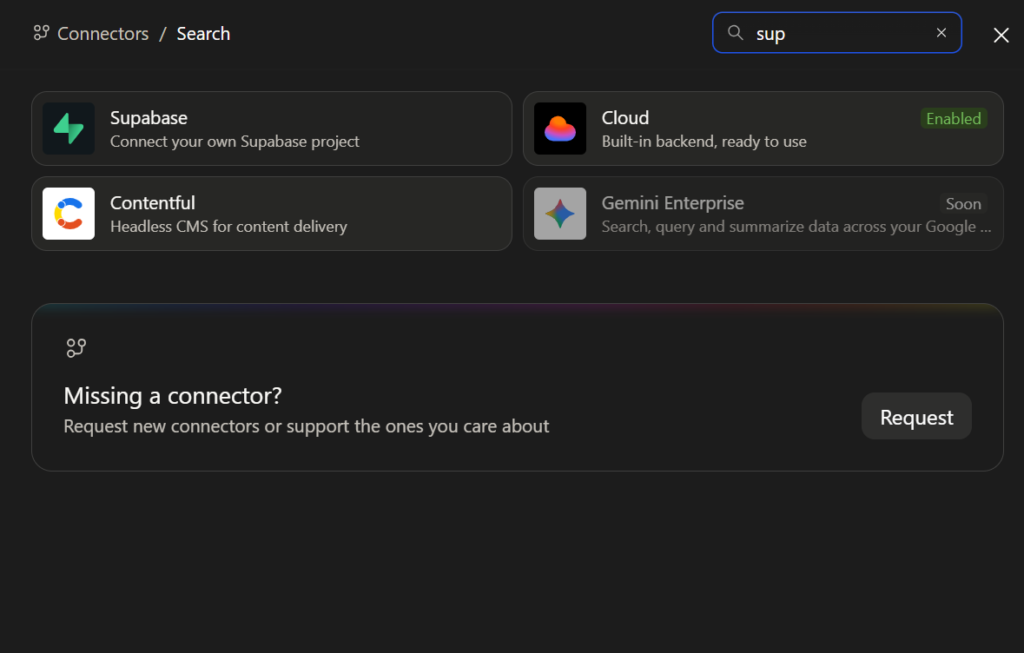
If you want your app to actually store data – user profiles, posts, products, anything – you need a database. Lovable’s recommended partner for this is Supabase, an open-source Firebase alternative that’s both powerful and free to start.
Here’s how the integration works in practice:
Create a free Supabase account
Go to supabase.com, sign up, and create a new project. Give it a name and a database password. You’ll be in the dashboard in under 2 minutes.
Connect Supabase inside Lovable
In your Lovable project, find the Supabase integration panel. You’ll paste in your Supabase project URL and anon key — both found in your Supabase project settings under “API.”
Tell Lovable to use Supabase in your prompts
Now you can say things like: “Add user authentication using Supabase. Users should be able to sign up with email and log in.” Lovable will write the complete auth flow connected to your database.
Test the auth and data flows
Always test every user-facing flow yourself. Create a test account, add some data, then check your Supabase dashboard to confirm it’s actually being stored. This step is non-negotiable before you ship anything real.
???? Insider tip: Before prompting Lovable to build database features, design your data structure first. Write down what “tables” you need and what fields they’ll contain. It’s the equivalent of architecting before you build — and it prevents a lot of painful back-and-forth prompting later.
Read More: Build a Mobile App Without Coding in 2026 (Using Replit)
How I Actually Use Lovable AI — Real Tips That Work
After using Lovable AI, I analyzed several things that I’m going to mention below. Read carefully—this is very important for you.
Be obsessively specific in your prompts
If your prompt is unclear, the result will be unclear too. For example, just saying “make a dashboard” usually gives you something very basic and generic. But when you explain it properly like asking for three cards at the top (total users, today’s revenue, active sessions), a line chart for the last 30 days of signups, and a dark sidebar on the left you start getting something much closer to what you actually had in mind.
Use the chat like a conversation, not a command line
A lot of people think they need to write perfect prompts, but honestly, you don’t. Just start with something simple, see what you get, and then tweak it. For example, you can say “the button colors are too strong, make them softer” or “the mobile layout doesn’t look right, stack it vertically.” It’s more like having a normal conversation than doing something technical.
Break complex apps into phases
Don’t try to build your entire vision in one prompt. Build the skeleton first navigation, pages, basic layout. Then layer in features one at a time. This iterative approach is also how real developers work, and it produces much better results.
Export your code periodically
Lovable lets you export your project to GitHub or as a ZIP file. Do this regularly. It’s your insurance policy if something goes wrong or you want to hand the project to a developer later, you have clean, readable code ready to go.
Don’t expect perfection — expect a strong foundation
Lovable won’t always nail complex interactions on the first try. But even when it gets 80% of the way there, that 80% represents hours of work you didn’t have to do. Adjust your mental model: you’re not trying to get it perfect, you’re trying to build a solid foundation faster than you ever could before.
Is Lovable AI Safe and Legit? My Honest Take
I’ve seen this question come up on Reddit and in various forums people wondering if Lovable AI is legitimate, safe to use, and worth their time. Let me give you my unfiltered take.
Is it legit? Absolutely. Lovable is a funded, well-established company with a real product. It was previously GPT Engineer — one of the most-starred open-source projects in the AI space before evolving and rebranding. It has hundreds of thousands of users.
Is it safe? For most use cases, yes. The code it generates is readable, exportable, and yours. There’s no vendor lock-in in the worst sense you can always take your code and go. As with any AI-generated code, review it before deploying anything that handles sensitive user data.
How many people use Lovable AI? Exact numbers aren’t publicly disclosed, but based on community activity, product hunt rankings, and social chatter, we’re talking hundreds of thousands of users globally. It’s grown substantially in 2024 and into 2025.
Is it a replacement for developers? No and honestly, the best way to think about it is as a force multiplier. Solo founders can now build things that would have required a team. Developers can prototype in an afternoon instead of a week. It expands what’s possible, it doesn’t make developers obsolete.
Have you tried Lovable AI? Drop your experience in the comments below – I genuinely read them all and would love to hear what you built.


Guter Beitrag! VV ULTIMATUM unter / passt gut zu diesem Thema. VV ULTIMATUM